Surface Visibility: The Logic of the Closed-Circuit DSMB
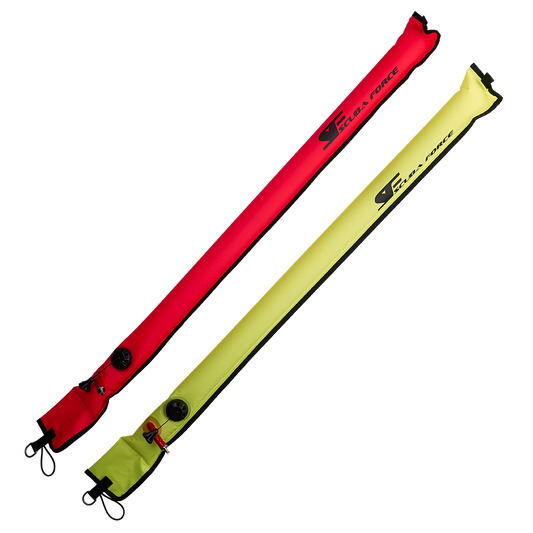
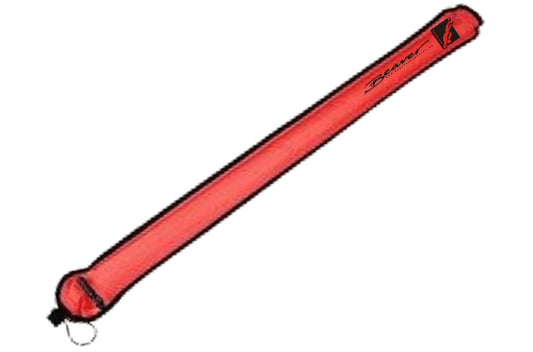
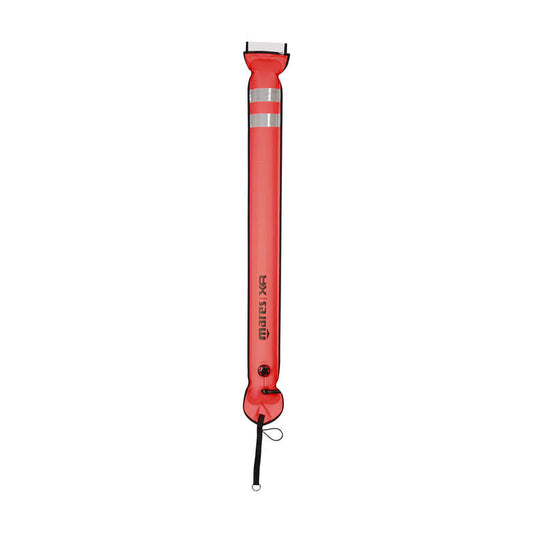
In the North Atlantic, a "floppy" buoy is a useless buoy. We recommend Closed-Circuit DSMBs for local missions. Unlike "open-ended" buoys that dump their air if they fall over on a wave, a closed-circuit buoy uses an internal one-way valve to keep the gas trapped. This ensures the buoy remains a rigid, vertical "pillar" of high-viz color, even in a heavy swell.
1. Inflation Methods: Choosing Your System How you put gas into the buoy at depth is a matter of safety and "muscle memory."
- Oral/Low-Pressure (LP) Inflator: The "Professional Standard." These buoys feature a nipple that allows you to inflate them with your drysuit or wing hose, or by mouth. This method is incredibly controlled and prevents the risk of an "accidental ascent" that can occur if you use your primary regulator.
- The "Crack of Gas" (Regulator Inflation): This method involves purging your octopus or primary into an open-bottom or baffle-style buoy. While fast, it is less precise and can be difficult to manage with heavy gloves or in high-surge environments.
- Crack Bottle: Some buoys use a small pressurised cylinder. While excellent for emergencies, they are "one-shot" tools and require more maintenance to ensure the cylinder hasn't corroded in salt water.
2. Over-Pressure Valves (OPV) All professional closed-circuit buoys include an OPV. As the buoy rises and the ambient pressure decreases, the air inside expands. The OPV automatically "bleeds" off the excess pressure so the buoy doesn't burst before it hits the surface. This is why a closed-circuit buoy is always rock-solid when it reaches the skipper.
3. Color Coding: The Language of Signaling
- ORANGE: The international standard for "I am here, and I am doing my deco/safety stop."
- YELLOW: Often used as an emergency signal (e.g., "I am out of gas" or "Send a medic").
- Note: Always discuss your color-coding with your boat skipper before the dive.
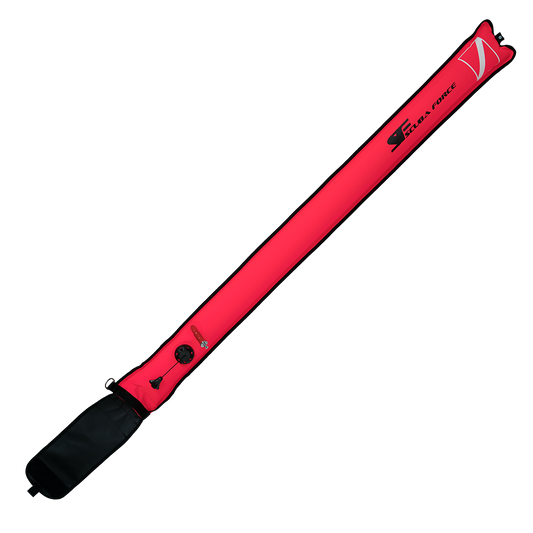
Oceanauts Standard: We recommend a 1.4m to 1.8m Closed-Circuit buoy for Irish Sea diving. A smaller buoy can disappear in the trough of a wave, while a larger one provides the height needed to be seen from the bridge of a dive boat.


 Sold out